What Should You Ask Before Hiring a Custom Home Builder in San Antonio?
August 18, 2026
Where Are the Best Areas to Build a Custom Home Around San Antonio?
October 18, 2026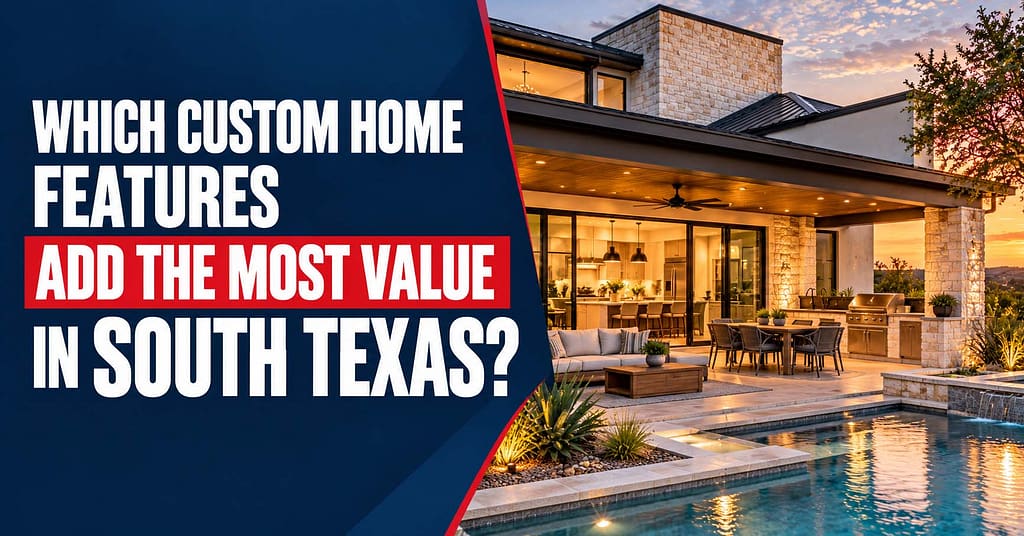
Quick Answer
The custom home features that tend to add the most value in South Texas are energy-efficient construction, a well-designed kitchen, flexible living spaces, a comfortable primary suite, covered outdoor living, storm-resistant materials, generous storage and water-conscious landscaping.
The most valuable features are not always the most expensive. They are the improvements that make a home more comfortable, functional, durable and affordable to maintain in the South Texas climate. Features chosen during the design phase—such as proper orientation, insulation, efficient HVAC equipment and smart storage—can also provide more long-term value than decorative upgrades added after construction.
No feature guarantees a specific return at resale. However, building a home around regional conditions and the way families actually live can increase its everyday usefulness and broaden its appeal to future buyers.
What Does “Adding Value” Really Mean?
When planning a custom home, value should be measured in more than one way.
A feature may add value by:
- Improving the home’s resale appeal
- Reducing monthly energy or water expenses
- Making the home more comfortable
- Lowering future maintenance requirements
- Helping the home withstand South Texas weather
- Allowing the home to adapt as a family’s needs change
- Making difficult or expensive renovations less likely later
- Improving how frequently a space is used
A dramatic feature may look impressive in photographs without improving the home’s daily function. In contrast, a properly sized HVAC system, shaded windows or a well-designed pantry may quietly provide value every day.
The goal is to create a balanced home that feels personal to the original owner while remaining practical for the future.
1. Energy-Efficient Construction
Energy efficiency is one of the most practical investments for a custom home in South Texas. Long cooling seasons, intense sunlight and periods of extreme heat can make inefficient homes expensive and uncomfortable.
A high-performance home begins with the building envelope—the parts of the house that separate conditioned living areas from the outdoors.
Important features may include:
- Properly installed insulation
- Comprehensive air sealing
- High-performance windows
- Insulated exterior doors
- Efficient roofing materials
- Correctly sealed ductwork
- Right-sized HVAC equipment
- Balanced ventilation
- Smart thermostats
- Energy-efficient appliances
- LED lighting
These systems work together. Installing efficient air-conditioning equipment will not provide its full benefit if the home has air leaks, poorly installed insulation or excessive heat entering through the windows.
ENERGY STAR identifies air sealing, properly installed insulation and high-performance windows as essential parts of a complete thermal enclosure. These measures can improve comfort, durability and energy performance throughout the home.
Why Energy Efficiency Adds Value
An energy-efficient home can provide:
- Lower utility consumption
- More consistent indoor temperatures
- Reduced hot and cold spots
- Better humidity control
- Less strain on heating and cooling equipment
- Greater appeal to operating-cost-conscious buyers
Homeowners should ask their builder how the home’s performance will be evaluated. Equipment ratings matter, but installation quality is equally important.
2. A High-Performance HVAC System
Air conditioning is not a minor system in South Texas. It plays a central role in comfort, indoor air quality and monthly operating expenses.
A valuable HVAC system is not simply the largest or most expensive unit available. Oversized equipment may cool the home quickly without running long enough to manage indoor humidity effectively.
A properly designed system should consider:
- The home’s square footage
- Ceiling heights
- Insulation levels
- Window sizes and orientation
- Air leakage
- Room usage
- Occupancy
- Heat-producing appliances
- Local climate conditions
Features such as variable-speed equipment, zoning and smart controls may improve comfort when properly designed for the home.
Duct location also matters. Ducts running through an extremely hot attic can lose energy if they are poorly sealed or insulated. Whenever the design allows, locating ducts within or closer to the conditioned envelope can improve performance.
Do Multiple HVAC Zones Add Value?
Zoning can be helpful in larger homes, two-story homes, multigenerational layouts and houses with rooms that receive significantly different amounts of sunlight.
For example, a west-facing upstairs bedroom may have different cooling needs from a shaded room on the first floor. Separate zones can allow the system to respond more precisely instead of treating the entire home as one space.
Zoning should be professionally designed. Simply adding more thermostats does not guarantee better performance.
3. High-Performance Windows and Thoughtful Home Orientation
Large windows can make a custom home feel open, bright and connected to the outdoors. In South Texas, however, window placement can significantly affect indoor temperature and cooling demand.
West-facing glass receives intense afternoon sunlight. A home with large unshaded western windows may be harder to cool, even when the windows themselves are high quality.
Consider combining high-performance windows with:
- Thoughtful home orientation
- Roof overhangs
- Covered patios
- Exterior shading
- Strategic tree placement
- Appropriate window-to-wall ratios
- Glass selected for the local climate
ENERGY STAR notes that certified windows can reduce heat gain while still allowing natural light into the home. Homeowners should review both the U-factor and solar heat gain coefficient when comparing products.
The value comes from balancing natural light, views, architecture and energy performance.
4. A Functional, Well-Designed Kitchen
The kitchen remains one of the most important rooms in a custom home. However, value comes from function rather than size alone.
A valuable kitchen should support food preparation, storage, entertaining and everyday movement. Important design considerations include:
- Adequate counter space
- Durable countertop materials
- Quality cabinetry
- Convenient appliance placement
- Accessible trash and recycling
- Layered lighting
- Comfortable aisle widths
- Ventilation to the exterior
- Electrical outlets where they are needed
- Storage designed around the homeowner’s habits
An oversized kitchen with poor circulation may be less useful than a smaller kitchen with an efficient work pattern.
Which Kitchen Features Are Worth Considering?
Depending on the household, high-value features may include:
- A large island with seating
- Deep drawers for pots and pans
- A pull-out trash center
- Tray and cutting-board storage
- Under-cabinet lighting
- A dedicated beverage station
- A prep sink
- A gas or induction cooktop
- A vent hood that exhausts outdoors
- An appliance garage
- A walk-in or working pantry
Materials should also be selected for durability. A custom kitchen will be used frequently, so surfaces should be able to handle heat, moisture, spills and cleaning.
5. A Walk-In Pantry or Working Pantry
A generous pantry is one of the custom-home features that can improve daily life without dominating the main living area.
A traditional walk-in pantry adds food and small-appliance storage. A working pantry may also include countertops, outlets, a second refrigerator, a sink or space for food preparation.
This feature can help keep the primary kitchen organized during entertaining or busy family routines.
Potential pantry features include:
- Adjustable shelving
- Countertop workspace
- Small-appliance outlets
- A second refrigerator or freezer
- Wine or beverage storage
- Space for bulk purchases
- Easy-to-clean flooring
- Task lighting
- Ventilation when needed
The pantry should be designed according to how the homeowner shops, cooks and entertains. Adding excessive square footage without a clear purpose can waste space.
6. Covered Outdoor Living
Outdoor living can add considerable lifestyle value in South Texas, but the space must be designed for the climate.
An uncovered patio exposed to intense afternoon sun may be uncomfortable for much of the year. A shaded, well-oriented outdoor room is more likely to be used regularly.
Valuable outdoor features may include:
- A deep covered patio
- Ceiling fans
- Durable flooring
- Comfortable lighting
- Electrical outlets
- A television connection
- An outdoor kitchen
- A fireplace or fire feature
- Retractable screens
- Insect-control planning
- Direct access to a bathroom
- Storage for cushions and outdoor supplies
The patio’s orientation matters. Western exposure can make the area extremely hot late in the day. Shade structures, landscaping and screen systems can make outdoor spaces more comfortable.
A pool may add strong lifestyle value for some households, but it also brings construction, maintenance, insurance and water costs. It should be viewed as a personal-use investment rather than a guaranteed financial return.
7. Flexible Rooms That Can Change Over Time
A room that can serve more than one purpose may provide greater long-term value than a space designed for one highly specific use.
Flexible rooms can function as:
- A home office
- A guest bedroom
- A nursery
- A fitness room
- A playroom
- A hobby room
- A media room
- A study area
- A caregiver’s room
To preserve flexibility, consider including a closet, nearby bathroom access, appropriate sound control and enough electrical capacity for different uses.
A dedicated office continues to be valuable for remote work, business ownership, studying and household management. Locating it near the entrance may also allow homeowners to meet with clients without bringing them through private areas of the home.
8. Multigenerational Living Options
Many South Texas families plan for parents, adult children, extended family members or long-term guests to live under one roof.
A multigenerational layout may include:
- A private bedroom suite
- An accessible bathroom
- A sitting area
- A kitchenette
- A separate entrance
- Additional sound insulation
- Laundry access
- Wider doors
- Minimal steps
- Dedicated parking
Privacy is important. A bedroom placed directly beside a noisy living area may not function well for an older parent or long-term guest.
Even if a full secondary suite is unnecessary, designing a first-floor bedroom and bathroom can make the home more adaptable. It may serve as a guest suite today and support aging family members later.
Local zoning, septic, HOA and deed restrictions should be reviewed before planning a fully independent living area.
9. A Comfortable First-Floor Primary Suite
A well-designed primary suite is valuable because it supports both current comfort and long-term accessibility.
Desirable features may include:
- Adequate room for furniture
- Controlled natural light
- Privacy from shared living spaces
- Direct access to the bathroom
- A well-organized closet
- Separate temperature controls
- Sound insulation
- Convenient laundry access
The bathroom should feel comfortable without relying solely on expensive decorative finishes. Layout, lighting, ventilation and storage can have a greater effect on daily satisfaction.
Practical features may include:
- A curbless or low-threshold shower
- A built-in bench
- Handheld shower controls
- Slip-resistant flooring
- Comfortable clearances
- Reinforcement for future grab bars
- Easy-to-clean materials
- Separate storage for each user
These details can support aging in place without making the room look institutional.
10. Generous and Purposeful Storage
Insufficient storage is difficult and expensive to correct after construction. Well-planned storage can make a home feel more spacious without adding large amounts of square footage.
High-value storage areas may include:
- A walk-in pantry
- A mudroom
- A linen closet
- Built-in garage storage
- Holiday-item storage
- Sports-equipment storage
- An entry drop zone
- Laundry-room cabinetry
- Bathroom drawers
- Outdoor-equipment storage
Storage should be located near where items are used. A large closet on the opposite side of the home may be less useful than several smaller storage areas placed strategically.
Attic storage should be planned carefully. South Texas attic temperatures can be extreme, making the space unsuitable for temperature-sensitive belongings. Safe access and structural loading must also be addressed during design.
11. An Organized Mudroom or Drop Zone
A mudroom helps contain the items that otherwise accumulate near the kitchen or entry.
Depending on the family, the space may include:
- Hooks
- Lockers
- Shoe storage
- Drawers
- A bench
- Charging outlets
- Mail storage
- Pet supplies
- A utility sink
- Access to the garage or backyard
Families with children, pets or outdoor hobbies often find this space especially useful.
The mudroom does not need to be enormous. A well-designed wall with hooks, closed cabinets and a bench can provide substantial function within a relatively small area.
12. A Practical Laundry Room
Laundry rooms often receive less attention than kitchens and bathrooms, but a poor layout can become a daily frustration.
Valuable laundry-room features may include:
- Counter space for folding
- A utility sink
- Hanging space
- Closed storage
- Space for hampers
- Floor drainage where appropriate
- Good ventilation
- Sound separation
- Durable flooring
- Direct access to the primary closet or mudroom
Locating the laundry near the bedrooms can reduce the distance clothes must be carried. However, the room should be insulated or positioned to prevent equipment noise from disrupting sleeping areas.
13. Durable Exterior Materials
South Texas homes must endure strong sun, high temperatures, wind, heavy rain and occasional hail or freezing weather.
Durable exterior materials may not create the same immediate visual impact as an elaborate interior feature, but they can reduce maintenance and help protect the home.
Important exterior considerations include:
- Impact-resistant or durable roofing
- Proper roof flashing
- Quality windows and exterior doors
- Moisture-resistant wall assemblies
- Durable siding, stucco, brick or stone
- Proper drainage
- Gutters where appropriate
- Corrosion-resistant exterior hardware
- UV-resistant finishes
- Termite-conscious construction details
Material selection should account for the property. Coastal South Texas homes may require greater attention to wind resistance, salt air and corrosion, while Hill Country homes may face different terrain, drainage and wildfire considerations.
14. Storm-Ready and Backup-Power Features
Severe thunderstorms, wind, hail and temporary power interruptions are part of living in Texas. Planning for resilience during construction may be easier and less expensive than retrofitting the home later.
Useful features may include:
- A whole-home surge protector
- Generator-ready electrical connections
- A designated generator pad
- Battery-storage preparation
- Protected mechanical equipment
- Impact-resistant roofing materials
- Secure exterior doors
- Properly rated garage doors
- Strategic drainage
- Backup power for essential circuits
Not every homeowner needs a full standby generator. However, prewiring the electrical system and identifying essential loads can make a future installation easier.
If solar panels may be added later, discuss roof orientation, conduit pathways, electrical-panel capacity and structural requirements during design.
15. An Oversized or Well-Planned Garage
Garages in custom homes often serve multiple purposes. In addition to vehicles, homeowners may need room for tools, recreational equipment, lawn supplies, freezers or workshop space.
Consider:
- Longer bays for trucks or large SUVs
- Wider garage doors
- Storage walls
- Ceiling-mounted storage
- An electric-vehicle charging circuit
- A workbench
- A utility sink
- Additional electrical outlets
- Insulated doors
- Space for a second refrigerator or freezer
Increasing the garage depth during initial construction may be more practical than trying to add usable storage later.
The garage should not become unnecessarily large at the expense of more important living areas, but it should fit the vehicles and equipment the family actually owns.
16. Electric-Vehicle and Future-Technology Preparation
Even if the homeowner does not currently own an electric vehicle, an EV-ready garage can add future flexibility.
Preparation may include:
- Adequate electrical-panel capacity
- A dedicated circuit
- Proper conduit
- Suitable charger placement
- Space for future battery equipment
Other technology-ready features may include:
- Structured wiring
- Ethernet connections
- Wireless-access-point locations
- Security-camera wiring
- Smart-home controls
- Motorized-shade wiring
- Whole-home audio preparation
- A centralized technology cabinet
Wireless technology changes rapidly, but well-placed conduit and hardwired network connections can make future upgrades easier.
The most valuable smart-home systems are usually those that remain easy to operate manually and do not depend on one short-lived product platform.
17. Water-Conscious Landscaping
A water-intensive landscape can become costly and difficult to maintain during periods of drought and watering restrictions.
Landscaping designed around South Texas conditions can improve curb appeal while reducing water demand.
Consider using:
- Native and well-adapted plants
- Reduced turf areas
- Drip irrigation
- Hydrozoning
- Mulched planting beds
- Shade trees
- Permeable hardscape
- Soil improvement
- Rainwater collection
- Smart irrigation controls
Texas A&M AgriLife recommends research-based landscaping practices that combine attractive design with water conservation. Native and adapted plants can often require less supplemental water once established.
San Antonio Water System also offers conservation programs and residential incentives that may help qualifying customers create more water-efficient landscapes. Programs and eligibility can change, so homeowners should review current SAWS conservation options before making purchasing decisions.
Does Rainwater Harvesting Add Value?
Rainwater harvesting can support landscape irrigation and reduce reliance on potable water.
The system may range from small rain barrels to a large permanent cistern. The right choice depends on roof area, rainfall, available space, landscape needs and local requirements.
It adds the most value when it is incorporated into the drainage and landscape plan rather than installed as an afterthought.
18. Shade Trees and Climate-Responsive Landscaping
Mature shade trees can improve appearance, outdoor comfort and privacy. When placed appropriately, trees may also reduce direct sunlight on windows, walls and outdoor living areas.
Tree placement must account for:
- Mature canopy size
- Root growth
- Foundation clearance
- Utility lines
- Driveways and sidewalks
- Pool location
- Fire safety
- Irrigation needs
- Local soil conditions
Preserving existing healthy trees may add immediate character to a new home, but the builder and arborist should determine which trees can safely remain during construction.
Trees located too close to the building pad or construction access route may be difficult to protect.
19. Aging-in-Place Design
Accessibility features can be incorporated subtly so the home remains attractive while becoming easier to use for people of different ages and abilities.
Features may include:
- A step-free entrance
- Wider doorways
- Lever-style door handles
- A first-floor bedroom
- An accessible bathroom
- Reinforced shower walls
- Comfortable hallway widths
- Improved lighting
- Minimal floor transitions
- Space for a future elevator
- Easy-to-reach controls
These features can help homeowners remain in the home longer and may appeal to multigenerational buyers.
Planning them during design is usually easier than widening doors, restructuring bathrooms or eliminating steps after construction.
20. A Floor Plan With Good Flow
No individual upgrade can fully compensate for a poorly planned floor plan.
A valuable layout should provide:
- Logical movement between rooms
- Privacy for bedrooms and bathrooms
- Convenient access from the garage
- Good furniture placement
- Natural light
- Views of outdoor areas
- Separation between noisy and quiet spaces
- Efficient use of square footage
Open-concept living remains popular, but completely open spaces can create noise, storage and furniture-placement problems. Many homeowners prefer connected main living areas combined with a pantry, office, flex room or secondary retreat that can be closed off.
Value comes from creating openness where it improves the home and separation where it supports privacy or concentration.
Which Features May Not Provide a Strong Return?
Highly personalized features may provide tremendous enjoyment to the original owner without appealing to a broad group of future buyers.
Examples can include:
- Extremely specialized hobby rooms
- Elaborate themed interiors
- Oversized formal rooms that are rarely used
- Technology that quickly becomes outdated
- Unusually expensive imported finishes
- Excessive built-ins that limit furniture placement
- More bathrooms than the home’s layout requires
- Large water-intensive lawns
- Pools built without sufficient surrounding space
- Complicated architectural details that increase maintenance
This does not mean homeowners should avoid personal features. The purpose of a custom home is to create a space that reflects the owner’s lifestyle.
The key is balance. Design specialized rooms so they can be adapted later, and avoid spending heavily on features that reduce the home’s general functionality.
How Should You Prioritize Features When Building on a Budget?
Begin with improvements that would be difficult or expensive to add after construction.
First Priority: Structure and Performance
Focus on:
- Site planning
- Drainage
- Foundation design
- Insulation
- Air sealing
- Windows
- HVAC
- Roofing
- Electrical capacity
- Plumbing infrastructure
These elements affect the home’s durability, comfort and operating costs.
Second Priority: Layout and Function
Invest in:
- Room placement
- Storage
- Kitchen function
- Bathroom layout
- Flexible spaces
- Accessibility
- Outdoor-living orientation
Moving walls, plumbing and major mechanical systems after construction can be expensive.
Third Priority: Durable Finishes
Choose quality materials for high-use areas such as flooring, countertops, cabinets, roofing and exterior surfaces.
Fourth Priority: Decorative Upgrades
Lighting fixtures, paint colors, cabinet hardware and some decorative finishes can often be changed later with less disruption.
A practical custom-home budget should protect the structure and function before allocating large amounts to easily replaceable design elements.
Frequently Asked Questions
What feature adds the most value to a South Texas custom home?
There is no single feature that adds the most value to every home. Energy-efficient construction, a functional floor plan, a well-designed kitchen and covered outdoor living generally offer a strong combination of comfort, usability and future buyer appeal.
Are energy-efficient upgrades worth including in a custom home?
Yes. Efficient insulation, air sealing, windows and HVAC systems can improve comfort and reduce energy consumption. These features are most effective when designed as one complete system.
Does an outdoor kitchen add value in South Texas?
An outdoor kitchen can add meaningful lifestyle and resale appeal when it is shaded, durable and conveniently connected to the indoor kitchen. Its value depends on design quality and how often the homeowner will use it.
Does a swimming pool increase a home’s value?
A pool may make a home more attractive to certain South Texas buyers, but it does not guarantee that the owner will recover the full construction cost. Consider maintenance, insurance, water use, safety and the amount of remaining yard space.
Is a home office still a valuable feature?
Yes. A quiet, well-designed office can serve remote workers, business owners, students and household management needs. A flexible office that can become a bedroom or hobby room may provide even more long-term value.
Should a custom home include a generator?
A standby generator can be valuable for homeowners who prioritize backup power. At minimum, generator-ready electrical planning can make a future installation less disruptive.
Do luxury finishes add more value than additional square footage?
Not necessarily. Buyers generally respond to an appropriate balance of space, quality and function. Additional square footage that lacks a clear purpose may provide less value than a better kitchen, more storage or improved energy performance.
What should be installed during construction instead of added later?
Prioritize insulation, air sealing, electrical capacity, structured wiring, plumbing lines, accessibility framing, drainage and future technology conduit during construction. These improvements can be disruptive or expensive to add after the walls are closed.
Build for South Texas—and for the Way You Live
The most valuable custom home is not necessarily the largest or the most elaborate. It is the home that responds to its property, climate and owners.
In South Texas, that means paying close attention to heat, sunlight, water use, storms, outdoor living and long-term maintenance. It also means designing rooms that support everyday routines instead of adding features simply because they are popular.
Start with a durable structure and efficient building envelope. Then prioritize a thoughtful floor plan, functional kitchen, adaptable rooms, comfortable outdoor spaces and storage that makes the home easier to maintain.
If you are still establishing your overall investment, read our guide to the cost of building a custom home in San Antonio in 2026.
ABM Custom Homes helps homeowners plan and build custom homes that combine personal style with lasting functionality. From energy-efficient construction and flexible interiors to outdoor living and South Texas-ready materials, each home is designed around the property, the homeowner and the future.
Contact ABM Custom Homes to discuss your ideas and begin planning a home that delivers value for years to come.